A Facebook page can show off your work. It can't do the other three things a customer needs before they'll call: prove you're legitimate, show up in search, and make booking easy.
Facebook doesn't show up when people search Google
Most people looking for a trade don't open Facebook and search, they open Google. Facebook pages rank poorly, if at all, for those searches, which means every customer who searches instead of scrolls never finds you.
A website built with proper local SEO shows up for the exact searches your next customer is typing. That's the gap a Facebook page structurally can't close.
You don't own it, and that's a real risk
Facebook can restrict, demonetise, or remove a page for reasons entirely outside your control. Business pages get flagged by automated systems more often than most owners realise.
A website is yours. Nobody can switch it off, change its rules, or bury it under an algorithm update you had no say in.
Every enquiry looks the same, good and bad
A Facebook message gives you a name and a question, nothing else. There's no way to ask what the job actually involves before you reply.
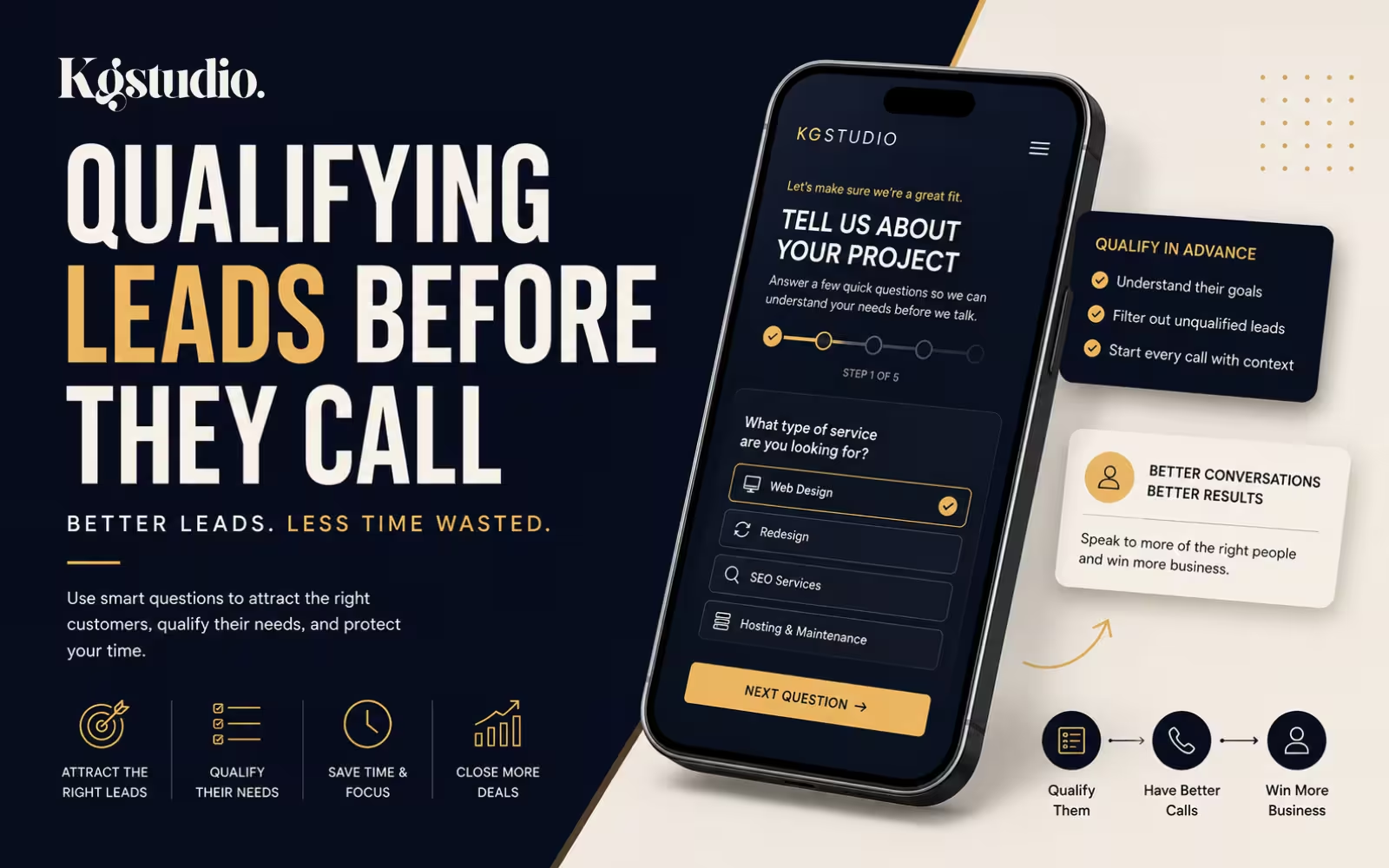
A proper enquiry form can ask the right questions up front, so you spend your time on the leads worth having instead of chasing details out of everyone who gets in touch.
Your best work gets buried by yesterday's post
Your strongest job, the one that would win you the next enquiry, is three scrolls down under whatever you posted since. Nobody's going to dig for it.
A website lets you put your best proof exactly where a new visitor will see it first, permanently, not for the few hours it sits at the top of a feed.
A website is built to convert; a feed is built to scroll
Facebook's entire design goal is to keep people scrolling past content, including yours. A website's entire design goal, done properly, is to move a visitor toward booking.
That difference in purpose is why businesses that switch from "just a Facebook page" to a real site consistently see more, and better qualified, enquiries.
- Facebook posts don't rank in Google search results, so "plumber Plymouth" won't surface your page
- A page you don't fully control can be restricted, hidden, or lost overnight
- There's no way to filter or qualify an enquiry before it lands in your inbox
- Reviews and photos get buried in an endless feed instead of building a case for you
- A website is built to convert a visitor into a booking; a feed is built to be scrolled past
Questions, answered
Should I get rid of my Facebook page?
No, keep it. It's useful for informal proof, local groups, and quick updates. Just don't let it be the only place a customer can find and vet you.
What's the minimum a proper website needs?
Clear services, real photos of your work, reviews, an easy way to enquire or book, and enough local SEO to actually be found on Google. Everything else is optional.